

"let me check quickly" in the age of instant answers
the death of not knowing and the moments that slip away from us

I’m Tuğba, a Greek-Turkish artist living in Berlin - as slow as possible is a newsletter exploring the in-between spaces of our lives that we see but often do not notice. Interested in reading more of my work?
“Do you remember that old wine bar in London at Embankment? The one along the Thames?”
“Oh yes, the oldest wine bar in London! It is beautiful… What was it called again?”
Without thinking, I reach for my phone. “Wait, I’ll Google it.”
My friend laughs and I realise how automatic it has become. This need to know NOW. To reach for our phone mid-conversation to look up something. To lose the beautiful moment we are in.
I could list endless scenarios in our day-to-day life… Someone mentions a film, a restaurant, a book, a plant, and within seconds, our hand reaches for our phone. This itch not to forget something, to note it down, to Google it. We no longer sit with not knowing. A moment of wonder becomes a tab on a browser.
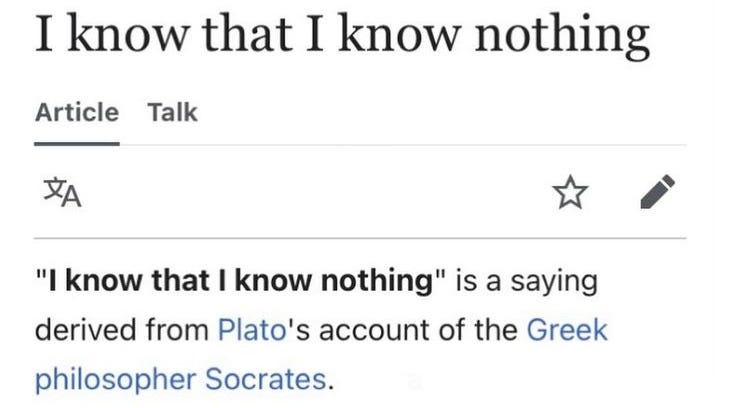
The anxiety of not knowing. The anxiety of forgetting. We all have it in us, and it manifests in subtle ways every day.
I used to blame it on my extreme curiosity, the need to look things up immediately, but lately, my own behaviour has started to bother me. This “extreme curiosity” totally throws off the beautiful moments I share with people. Worst of all, my attention is gone, and even if it may not feel like it in the moment, my brain needs time to settle back into the conversation. I do wonder sometimes what this constant need for certainty says about my relationship with control. Because in the end, in that moment, I’m trying to regain control of my brain, my memory, the situation. The urge rises so strongly, and letting go of control—by not knowing, by forgetting, and trusting that if it matters, my mind will recall it—is in a way allowing uncertainty to take over.
Once, memory lived in stories. Now, it lives in servers, in notes apps and bookmarks.
A conversation becomes a fact-gathering activity instead of a human exchange. Being truly present with someone softens us. It loosens our grip. It lets the conversation move like a boat on open water, carried by wind rather than force. The best conversations feel like that, don’t they? We let the energy take whatever course it needs. I always leave a great conversation feeling energised, expanded.
I do wonder, though, have we lost the ability to trust our own memory?
Most probably, yes.
I really think digital memory has become a substitute for human memory. And now with AI, it is even more extreme. Theoretically, we no longer need to remember anything at all. Everything is one phone grab away, one search away, one prompt away. There is an overreliance on “let me check quickly” and “let me ask ChatGPT”. I personally trust my own memory less and less, and some days, I simply excuse it as never having had a good memory to begin with.
I want to take steps to be comfortable with not knowing. We already consume so much information, and these micro-drips of input add to the flood. They fragment our focus. Stopping mid-conversation to look something up is another form of multitasking. I want to sit with the discomfort of not knowing and even forgetting.
Not everything is important or urgent. Yet we live in a culture where even our thoughts and discomforts feel urgent, as though they require immediate action. Life or death. This urgency culture, especially around our minds, is eroding our ability to think deeply. We are not patient enough to see if our brain will recall something on its own, or if it can make the connection without Google or AI.
I love technology; otherwise, I would not have worked this many years in tech, but I’m more worried than ever about my creativity and critical thinking. Some may argue that people had the same concerns when calculators appeared, and we survived. Yet a calculator replaced one narrow skill. Today’s technology is replacing a whole spectrum of mental functions. Critical thinking is a pleasure I don’t want to outsource. That is the essence of creativity, the part of us that is individual, impossible to replicate, in a world already struggling with sameness.
“… all the inventions we previously had were kind of a tool for doing something, so we invented fire. Huge game-changer, but that’s it. It stops with fire … Here we’re inventing a replacement for the human mind, a new inventor capable of doing new inventions. It’s the last invention we ever have to make. At that point, it takes over, and the process of doing science, research, even ethics research, morals, all that is automated at that point.”
Dr Roman Yampolskiy, AI safety researcher and professor at the University of Louisville, in conversation with Steven Bartlett
Sometimes, I feel like I’m living in a Black Mirror episode when I reflect on our reliance on technology and our enthusiasm to turn it into a second brain, when in reality, it is becoming our first. Maybe it does not matter to some, but the way I take care of my body is the way I want to take care of my mind. I want to trust that I can recall things, if they truly matter, and I do not want to feel like a failure if I cannot. Perhaps my brain simply did not register it as important! I want the joy of flow, the spark that comes when thoughts link in surprising, original ways. Why would I want to give that away?
So, what am I doing to counteract things you may be wondering?
First, I am resisting the urge to look things up on autopilot. I’m letting thoughts drift, even disappear, and sitting with the discomfort. I do not nail it every time, but when I manage it a handful of times, I relish the feeling of letting go of control.
I have also realised that reading books is a beautiful way to strengthen attention and imagination. 360 pages of slow immersion feels like rebellion in an age of endless shortform content. To read a book from start to finish, to let it unfold slowly, to make connections yourself, to imagine, to feel, to let a narrative live inside you, that feels like using the mind the way it is meant to be used.
And most importantly, reminding myself that I may still forget the name of that wine bar. And maybe, one day, it will come back to me when I least expect it. Or maybe it will not.
Either way, I would rather forget a place than forget how to be present with a person.
Your friend
Tuğba
Video: Comedian Harris Alterman
P.S. If you enjoyed reading this, it would mean a lot if you shared it with your friends or hit restack 🔄 I’m slowly growing this little corner of the internet as I work towards publishing my book, and your support truly helps.
This post resonated with so many of you 🥹 Thank you for all the love 🫶🏻

It fills me with rage and sadness when I’m out socialising with friends and the conversation starts to descend into beautiful, unhinged madness based on zero actual fact and only weird feelings and then some prick pulls out a phone and says ‘I’ll Google it real quick’.
No! I want to hear Amy and Sarah absolutely lose their highly educated, normally logical minds battling it out over why Dachshunds are the shape they are. I want the weird. I want the mental.
The video was funny!! !! and I like what you said about books too. You're always writing extremely smart things, I love reading you :)